When Your Body Has Been Your Battle for So Long
For most of my life, I knew my body in a certain way. Not necessarily because I loved everything about it, but because I understood it. I knew what was normal for me, what wasn’t, what my cycle meant, when something felt wrong and when I needed to pay attention.
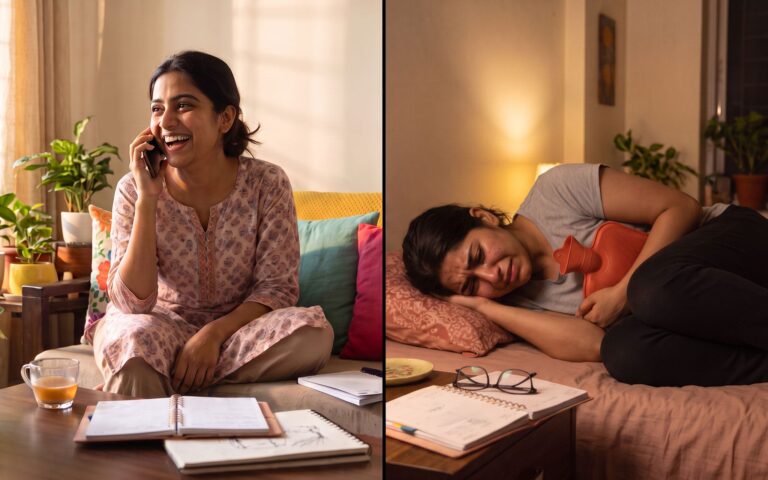
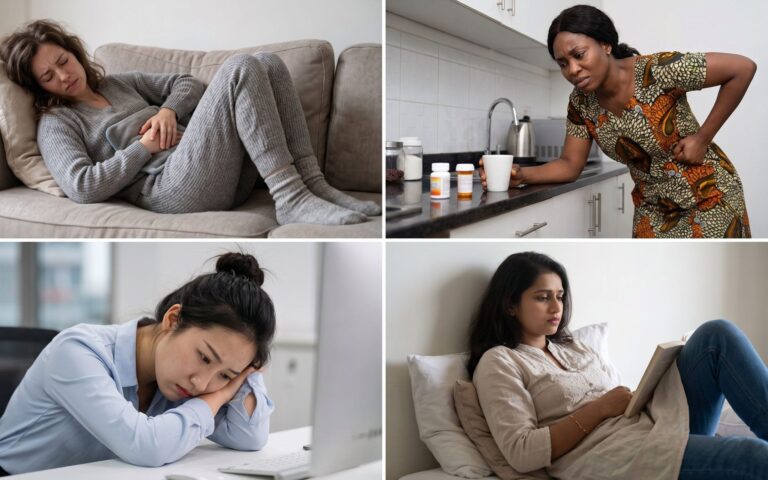
After living with endometriosis for more than 30 years, I also became very familiar with pain, fatigue, bloating, bowel problems, inflammation and all the other things that can come with a body affected by a chronic condition [1]. I also lived with adenomyosis. There were years of uncertainty, years of being dismissed, years of trying to explain symptoms that other people couldn’t see, and eventually multiple surgeries. By the time I had my hysterectomy, my body had already been through so much.
But I never really understood how much my body was connected to my identity until everything started changing.
The Years That Changed How I Saw My Body
For years, I thought my biggest challenge was simply getting through the pain and finding answers. Living with endometriosis for so long meant that my relationship with my body was never straightforward. I had to learn to listen to symptoms that were often dismissed, to understand pain that didn’t always have an obvious explanation, and to keep going even when my body was asking me to slow down.
There were times when I felt frustrated with my own body, almost as though it was working against me. But looking back, I realize it wasn’t my body that had failed me. My body had been trying to tell me that something was wrong.
Adenomyosis added another layer to that journey. And after years of living with both conditions, multiple surgeries and everything that came with them, I had already experienced so many changes that I thought I was prepared for whatever came next.
I wasn’t.
Because there is a difference between living with a body that is struggling and suddenly having to learn a body that is changing.
That is where my story took another turn.
The Menopause I Never Got to Ease Into
After my hysterectomy came something I wasn’t prepared for in quite the same way: surgical menopause.
I didn’t get to gradually ease into menopause. There wasn’t a slow transition where I could notice small changes and adjust over time. My body was suddenly pushed into a completely different hormonal phase. And honestly, that was a lot to process.
I think we often talk about menopause as though it is simply about periods stopping, hot flashes and maybe a few sleepless nights. But for many women, it is so much bigger than that. It can affect your sleep, your energy, your skin, your emotions, your concentration, the way your body feels and changes, and the way you see yourself.
And when that transition happens suddenly, after years of illness and surgery, it can feel like yet another version of yourself that you have to learn.
I Was Already Learning One New Body
I was already trying to understand a body that had been changed by endometriosis and adenomyosis. Then suddenly I had to understand this new body too.
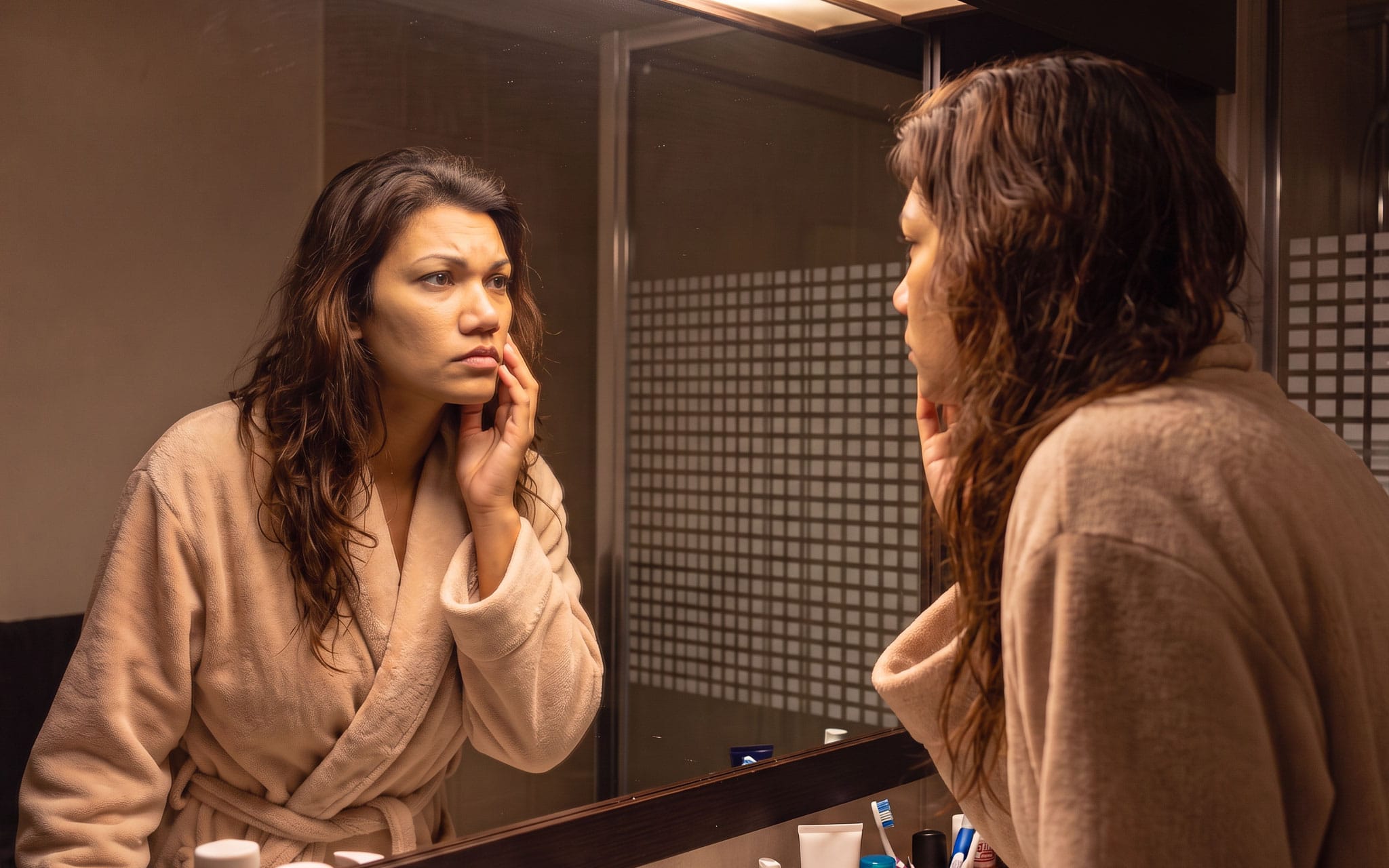
There were changes I wasn’t prepared for. My weight changed. My body felt different. The way my clothes fitted changed. I didn’t always recognize the person looking back at me in the mirror.
And that part can be surprisingly emotional because you can understand something intellectually and still struggle with it emotionally.
I knew why my body was changing. I knew I had been through surgery. I knew my hormones had changed. I knew menopause was a new stage of life. But knowing all of that didn’t automatically make me comfortable in my body.
There were days when I looked at myself and thought, “Where did I go?”
Not because I had become a different person, but because the physical version of me that I had known for so many years was changing.
And Then Come the Opinions
Society has so many opinions about women’s bodies. We are told how we should look, how much we should weigh, how young we should appear, how quickly we should “bounce back” and how we should somehow remain unchanged as we get older.
Then menopause comes along and your body starts doing exactly what bodies are supposed to do, and suddenly you are expected to fight it. We are constantly told to lose the weight, get our old body back, look younger, try another diet, exercise more and somehow prevent ourselves from visibly changing.
I have heard comments about bodies. I have seen how casually people can make them. Sometimes they don’t even realize how deeply those words can affect someone.
And when you are already struggling to recognize yourself, hearing someone comment on your body can make that struggle even harder.
I have had to learn that my body is not a public discussion. It is not an invitation for other people to judge my health, my discipline, my age or my worth.
The Advice I Give Others, I Had to Give Myself
This part was humbling.
I have spent years helping women feel comfortable in their skin. I have talked to clients about confidence, self-esteem and how we see ourselves. I have reminded women that their worth is never determined by their appearance.
Yet here I was, having to give myself the same advice.
Because body acceptance sounds wonderful until you are the person standing in front of the mirror having to practice it.
I don’t want to pretend that I suddenly reached a place where I love every change. I haven’t. There are still days when I feel uncomfortable. There are still clothes I don’t feel like wearing. There are still moments when I miss the body I had before.
And I think we need to be honest about that.
Acceptance Doesn’t Mean Giving Up
Accepting your body does not mean you have to love every change. It doesn’t mean you can’t want to feel stronger, healthier or more comfortable. It doesn’t mean you stop caring about yourself.
For me, acceptance has slowly become something different. It is learning to stop punishing my body for changing. It is learning to listen to it instead of constantly fighting it. It is learning that caring for myself is not the same thing as trying to get my old body back.
And perhaps most importantly, it is understanding that my body is not my identity.
I Am Still Me
I am still me.
The woman who has lived through decades of endometriosis is still me. The woman who has lived with adenomyosis is still me. The woman who has gone through multiple surgeries, pain, uncertainty and hormonal changes is still me.
The woman who sometimes struggles with her reflection is still me. And the woman who is slowly learning to feel at home in her body again is also me.
There is a grief that can come with these changes that we don’t talk about enough.
You can grieve the body you had. You can grieve the younger version of yourself. You can grieve the gradual menopause you never experienced. You can grieve the years that illness took from you.
And none of that means you aren’t grateful to be here.
Both things can exist at the same time.
I Can Be Grateful and Still Struggle
I can be grateful for my body and still struggle with it. I can want to take better care of myself without hating the body I have today. I can acknowledge that I have changed without believing that I have become less.
That has probably been one of the biggest lessons for me.
My body has changed, but my worth hasn’t. My femininity hasn’t disappeared. My purpose hasn’t disappeared. And neither has the woman I have spent all these years becoming.
I Didn’t Lose Myself
I am not trying to become the woman I was before. I am learning to meet the woman I am now.
And perhaps that is what this new phase of life is really asking of us. Not to erase who we were, not to fight every change and not to measure ourselves against a younger version of ourselves, but to get to know ourselves again.
To understand what our bodies need now. To give ourselves the same compassion we so easily give to other women. And to remember that ageing, menopause, illness and changing bodies do not take away our femininity, our confidence, our purpose or our worth.
We are allowed to change. We are allowed to struggle with that change. And we are allowed to find our way back to ourselves, slowly and in our own time.
I am still finding my way.
But I am beginning to understand that perhaps I don’t need to find the woman I used to be.
I didn’t lose myself. I had to learn myself again.
References
- Becker CM, Bokor A, Heikinheimo O, Horne A, Jansen F, Kiesel L, King K, Kvaskoff M, Nap A, Petersen K, Saridogan E, Tomassetti C, van Hanegem N, Vulliemoz N, Vermeulen N; ESHRE Endometriosis Guideline Group. ESHRE guideline: endometriosis. Hum Reprod Open. 2022 Feb 26;2022(2):hoac009. doi: 10.1093/hropen/hoac009. PMID: 35350465; PMCID: PMC8951218.